
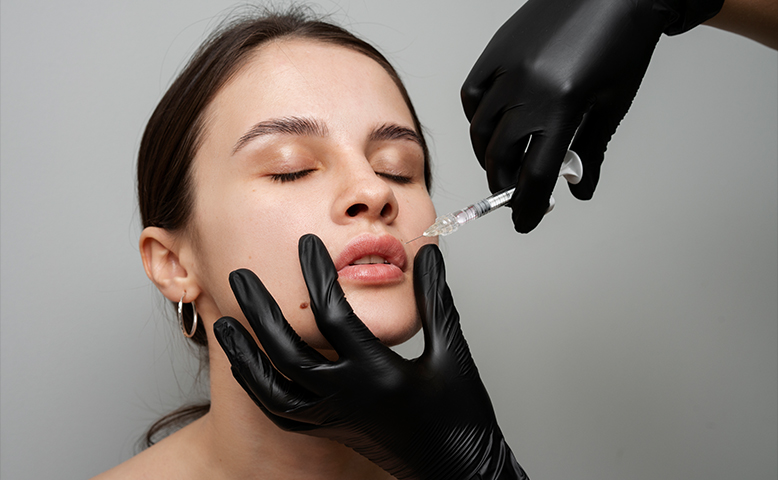
Your lips already have a shape, balance, and movement that fit your face. Lip filler should support that, not replace it. The “right” filler depends on lip height, Cupid’s bow, how your lips tuck in when you smile, and how hydrated your skin is. A good visit starts with what you want and what a trained injector can measure.
- Your upper-to-lower lip ratio at rest
- Your teeth show when you talk and smile
- Where your lip edge is sharp or softly faded
With those details, you can pick a gel texture and amount that settles well, looks even from different angles, and still feels like you at work and on weekends most days.
Check Your Shape
Before talking about products, read your own lip “map.” Look straight on, then at a 45-degree angle, and finally in profile. Notice where you want support: the center, the sides, or the border. Many people think they need more size, but often they need better shape or a small lift.
- Cupid’s bow: defined peaks or a smooth curve
- Vermilion border: the line between lip and skin
- Corners: do they dip down at rest?
When an injector follows your map, filler can strengthen weak points without changing your whole look. Bring clear photos of your relaxed face and your full smile so the plan fits your natural movement and speech in real life, too.
HA Filler Basics
Most lip fillers are hyaluronic acid (HA) gels. HA is a sugar found in skin and joints, and it binds water, which helps give soft, natural volume. Lips often do best with HA because it can usually be dissolved with an enzyme if an adjustment is needed. HA fillers are widely used; an American Society of Plastic Surgeons report noted 5,331,426 patients received HA filler treatments in 2024.
- HA gels vary in how tightly they are cross-linked
- More cross-linking often means slower breakdown
- Different gels can feel softer or firmer
Knowing the base material helps you compare options and ask for a product made for lips, not just cheeks or jawline.
Texture And Firmness
Two HA fillers can both be “lip fillers” yet behave differently once placed. What matters is gel texture: how it spreads, how it holds shape, and how it responds to smiling and talking. Some gels glide easily and suit fine smoothing, while others stay more in place for clearer definition. Injectors may mention “G prime,” a lab measure of firmness. Higher G’ holds structure more; lower G’ usually feels softer.
- Soft gels: light, plump, and dry-line smoothing
- Medium gels: balanced shape and volume
- Firmer gels: more support in a thin border
Matching texture to your lip movement lowers the risk of small bumps and keeps the mouth area looking relaxed, not tight.
Border Or Body
Natural results come from choosing where the gel will sit. The border shapes the outline and can help lipstick stay inside the line. The body adds fullness, mainly in the center, and can soften a “deflated” look that shows up with age. Doing both at once is possible, but many first sessions look better with one focus.
- Border focus: clearer edge without extra bulk
- Body focus: fuller center with soft edges
- Corner support: less downturned look at rest
A staged plan also protects proportion: your lips should still fit your nose, chin, and teeth show. You can always add later, but taking away is harder and may need dissolving for a reset.
Dose By mL
Lip filler is measured in milliliters (mL). A standard syringe is commonly 1 mL, and many first-time clients start with about 0.5 to 1 mL, then reassess after settling. Going slow matters because swelling can hide the final shape for several days. It also helps avoid pushing gel above the lip line, which can make the area look heavy.
- Subtle change: about half a syringe for many beginners
- Moderate change: around one syringe in a session
- Step-up approach: small sessions spaced weeks apart
Ask your injector to show the mirror view often during treatment, since tiny volume changes can shift balance quickly in the lips, your smile, and your profile noticeably.
Face Proportions Guide
A good plan considers the whole lower face, not just the lips. If the chin is small or set back, too much upper-lip volume can make the profile look unbalanced. If the philtrum is long, adding only to the border may not change the “long” look; careful placement in the body can help. Many injectors aim for an upper-to-lower lip balance near 1:1.6, but real faces vary.
- Check your profile, not only the front view
- Compare lips at rest and in a full smile
- Notice if volume pulls attention away from the eyes
Photos in natural light are a better judge than close-up selfies, which can distort proportions and lead to overdoing it.
Safety First Always
The safest product still depends on how it is placed. Lips have a rich blood supply, so anatomy knowledge and careful technique matter. Vascular injury from fillers is rare, but estimates in medical writing often fall around 0.01% to 0.05% per treatment. One clinical report found vascular compromise in 0.05% of 14,355 injections.
- Ask who will inject and what training they have
- Ask if hyaluronidase is available on-site for HA
- Ask about tools like cannulas or ultrasound use
Also learn warning signs: severe pain, pale patches, or sudden color change. These are uncommon, but fast action matters. Safety is part of the “right filler” for every visit. Ask about this early.
Smart Consult Questions
A short consult can prevent frustration. Bring photos, share cold sore history, and be honest about smoking, vaping, or blood thinners, since these can affect swelling and bruising. Tell your injector about any filler you’ve had before, even years ago, because some gel can remain.
- What gel texture fits my lip shape, and why?
- Where will you place it: border, body, or both?
- What is the plan if I dislike the result in two weeks?
Good clinics explain how much will be used, where it will go, and what settling should look like. If the consult feels rushed or vague, treat that as a sign to keep looking. You should feel informed.
Prep And Aftercare
Simple prep supports smoother healing. In the week before treatment, focus on hydration and avoid irritating products around the mouth. On the day, arrive with clean skin and plan a calm evening. Swelling often peaks in the first 24 to 48 hours, then settles over the next week or two.
- Avoid alcohol and heavy workouts for 24 hours
- Avoid aspirin and some supplements if your doctor agrees
- Use cool compresses briefly on day one
Skip saunas and hot yoga for 24 to 48 hours, and avoid lip massage unless your injector instructs it. If you are prone to cold sores, ask about antiviral prevention. Good care helps the gel sit evenly.
Natural Results Ahead
Choosing the right lip filler is about matching a gel’s feel and a plan to your own features. Start by mapping your shape, pick one focus for the first session, and use amounts that respect your face. HA is widely used for lips and can often be adjusted. HA results last about 6 to 18 months, though lips may fade sooner because they move a lot.
- Judge results at two weeks, not two days
- Save “more” for later, if you truly need it
- Keep photos to track balance over time
Small touch-ups later can keep things even. If you want guidance that stays natural, schedule a consult with Belle Beauty Bar.